ASDS
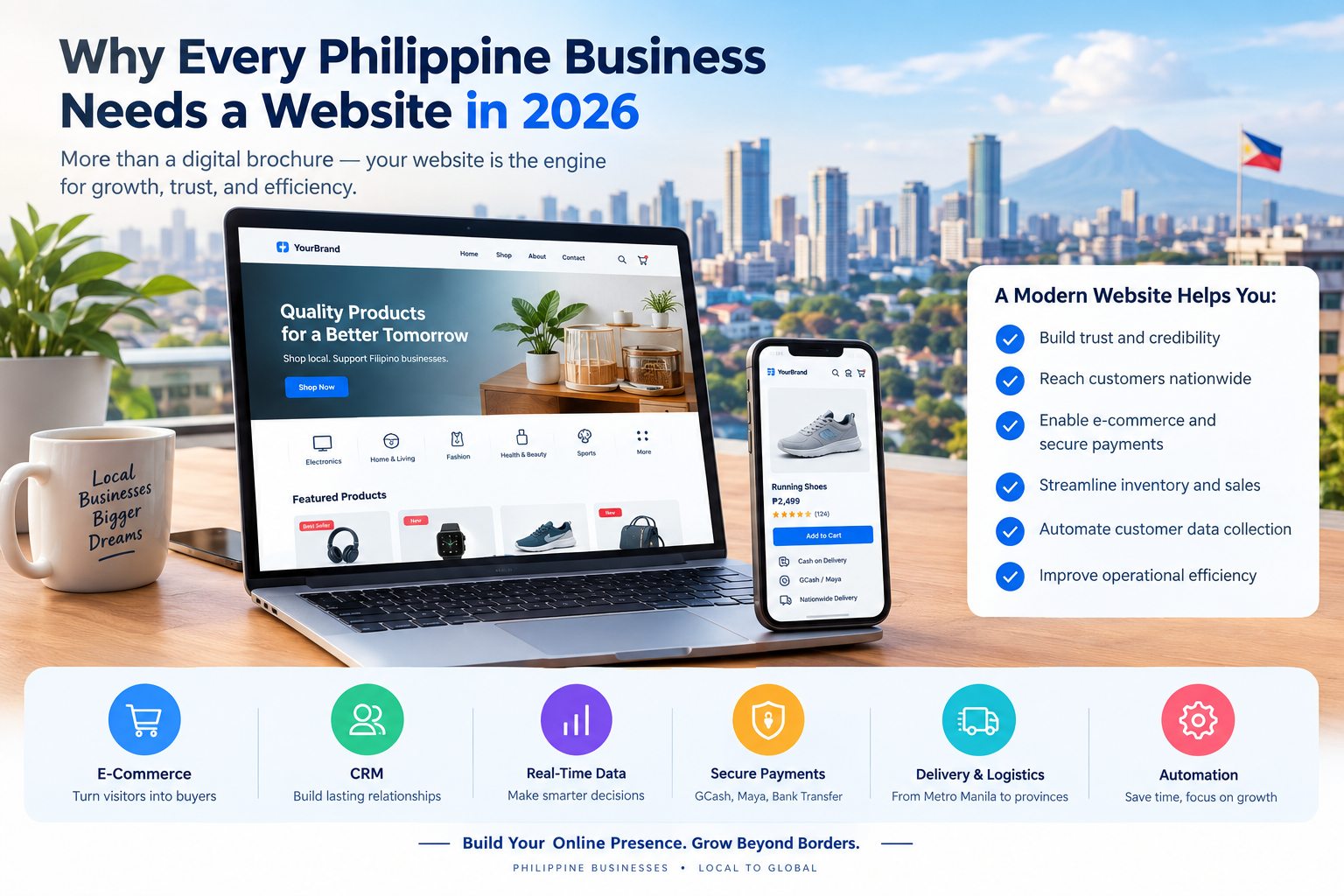
A website in 2026 is no longer just a digital brochure; it is the primary engine for growth, trust, and operational efficiency for Philippine businesses ranging from SMEs in Quezon City to national startups, serving as the central hub where customers discover, engage, and transact. In this context, a "website" is defined as a dynamic, responsive online presence that integrates e-commerce capabilities, customer relationship management, and real-time data reporting to automate business processes and reach clients beyond physical borders.
Why a Website is Essential for Philippine Businesses in 2026
Having a professional website is the single most critical step for any Philippine business today because it serves as the permanent digital storefront that operates 24/7 regardless of traffic, location, or time zones. Without an online presence, local retailers and service providers risk becoming invisible to customers who now expect to research options, compare prices, and read reviews before visiting a physical location or contacting a support team. The shift from traditional marketing to digital-first strategies means that businesses without a functional website are effectively missing out on the majority of potential leads generated through search engines and social media platforms.
Building Trust Before First Contact
In the Philippine market, where personal relationships matter but digital skepticism is growing, a well-designed website acts as the first point of contact that establishes credibility and professionalism instantly. Customers in Metro Manila and beyond will look for clear contact information, service descriptions, and visual proof of your team's expertise before they will call or visit your office. A polished site signals that you are organized, modern, and capable of handling complex business needs, which directly influences customer retention and the ability to command higher prices for your services.
Reaching Customers Beyond Physical Boundaries
The biggest advantage of a website is its ability to break geographical limitations, allowing businesses in remote provinces or small towns to compete with larger corporations based in Manila. Unlike a physical shop that only serves people within walking distance or ride-share range, a digital platform can capture interest from clients across the archipelago who are searching for specific solutions at exactly the moment they need them. This expansion is vital for Philippine startups looking to scale operations without the immediate capital expenditure required to open multiple brick-and-mortar locations.
Core Benefits of E-Commerce Functionality
E-commerce functionality embedded within a website transforms passive visitors into active buyers by providing a seamless, secure environment where transactions can happen instantly without human intervention. This capability is particularly powerful for Philippine retailers and service providers who want to reduce cash handling risks, optimize inventory management, and collect sales data automatically. By integrating local payment gateways and delivery logistics, businesses can streamline their revenue streams and offer customers the convenience of ordering goods or booking services from anywhere in the country.
Streamlining Inventory and Sales
A website with e-commerce capabilities allows you to manage stock levels, update prices in real time, and track order status through a unified dashboard, eliminating the manual errors often found in spreadsheets or paper ledgers. This integration ensures that when a customer places an order online, your inventory system immediately reflects the change, preventing overselling and saving valuable staff time on data entry and reconciliation tasks. The result is a smoother operational flow that allows your team to focus on delivering products rather than managing paperwork.
Integrating Local Payments and Logistics
For businesses operating in the Philippines, a successful e-commerce site must seamlessly integrate with local payment methods such as GCash, Maya, and bank transfers, alongside flexible delivery options tailored to Philippine cities and provinces. These integrations remove friction at the checkout stage, which is often the main reason for cart abandonment if customers are forced to use foreign-only gateways or complex billing processes. By supporting familiar payment habits and offering clear shipping estimates, you increase conversion rates and build loyalty among your customer base.
Automating Customer Data Collection
Every transaction processed through a website generates valuable data about customer behavior, preferences, and purchasing history that can be analyzed to improve future marketing efforts and product offerings. Unlike manual sales records, an e-commerce system automatically captures this information in structured formats, enabling you to identify trends, forecast demand, and target specific segments of your audience with precision. This data-driven approach allows businesses to make smarter decisions about pricing, promotions, and inventory restocking without relying on gut feelings.
Operational Efficiency Through Digital Systems
Beyond selling products, a robust website serves as the backbone for internal operations by integrating CRM tools, appointment scheduling, and automated workflows that reduce administrative overhead and improve response times. For service-based businesses like clinics, schools, or agencies in Quezon City, this means customers can book appointments, view schedules, and access documents online without waiting on hold or navigating confusing phone trees. The ability to automate routine tasks frees up human resources to focus on high-value activities that directly impact business growth and customer satisfaction.
Centralizing Customer Information
A website acts as a central repository for all customer interactions, storing contact details, communication history, and service records in one accessible location rather than scattered across emails, notes, or physical files. This centralized data ensures that every team member has access to the same up-to-date information, reducing duplication of effort and preventing mistakes caused by outdated records or lost documents. For teams managing multiple clients or large volumes of inquiries, this organization is essential for maintaining high standards of service delivery.
Implementing Automated Workflows
Modern websites can be configured to automate repetitive tasks such as sending welcome emails, confirming bookings, processing refunds, or notifying customers about order status updates without requiring manual intervention from staff. These automated workflows ensure that critical communications happen at the right time and reduce the risk of human error in scheduling or follow-up sequences. By delegating these routine processes to software, your team can handle a higher volume of work with the same number of employees while maintaining consistent quality.
Creating Real-Time Reporting Dashboards
Business owners benefit from having access to real-time dashboards that display live numbers on sales, website traffic, and customer activity, providing immediate visibility into business performance without waiting for end-of-month reports. These visual tools allow you to spot issues early, such as a drop in conversion rates or a sudden spike in support tickets, and take corrective action before the situation worsens. Having this instant feedback loop is crucial for agile businesses that need to adapt quickly to market changes or seasonal trends.
Strategic Growth and Marketing Integration
A website functions as the foundation for all digital marketing efforts, acting as the landing page where traffic from search engines, social media, and email campaigns converts into actual customers through optimized content and user experience. Without a dedicated site, it is difficult to measure the effectiveness of marketing spend or to guide visitors through a clear path toward conversion, which limits the return on investment for advertising budgets. In 2026, a website that is deeply integrated with SEO best practices and analytics tools becomes an indispensable asset for sustainable growth strategies.
Driving Organic Traffic Through Search Optimization
Search engines prioritize websites that are fast, mobile-friendly, and relevant to user queries, making a well-optimized site the most effective way to attract free, high-quality traffic from people actively searching for your services or products. By focusing on local keywords and clear content structure, businesses can rank higher in search results for terms like "best clinic in Quezon City" or "online store for home goods," capturing leads that are already interested in what you offer. This organic growth channel is often more cost-effective than paid advertising over the long term.
Enhancing User Experience and Conversion Rates
A website designed with the user in mind, featuring intuitive navigation, fast loading speeds, and mobile responsiveness, significantly increases the likelihood that a visitor will complete a desired action such as making a purchase or signing up for a newsletter. In an era where attention spans are short and devices vary from smartphones to desktops, a poor user experience leads to immediate bounce rates and lost opportunities, whereas a smooth experience encourages engagement and loyalty.
The Roadmap to Building Your Digital Presence
Creating a custom business system that meets your specific needs requires a structured approach that moves from understanding your goals to designing, building, and launching the solution with ongoing support. This process ensures that the final product is not just a generic template but a tailored tool that solves actual problems and drives measurable results for your organization. Skipping any of these steps can lead to scope creep, budget overruns, or a system that fails to integrate properly with your existing operations.
Step 1: Free Discovery Call
The journey begins with a free discovery call where we discuss your business goals, current processes, and specific challenges to understand exactly what you need to achieve digital transformation success. During this conversation, we identify key features, data requirements, and technical constraints so that the final solution is perfectly aligned with your operational reality rather than generic assumptions.
Step 2: Designing a Clear Plan
After the discovery call, ASDS designs a detailed plan that outlines the project scope, estimated timeline, and total price before any code is written, ensuring you have full transparency and control over the investment. This phase includes a breakdown of deliverables, milestones, and success metrics so that everyone involved understands exactly what will be built and when it will be ready for use.
Step 3: Building with Progress Updates
We then proceed to build your custom system while sharing working progress along the way through regular updates and demos, allowing you to see the software take shape and provide feedback before we finalize the design. This iterative approach ensures that the product evolves based on real needs rather than assumptions, minimizing the risk of rework or unexpected changes later in the project.
Step 4: Launch, Training, and Support
Once the system is complete, we handle the launch, provide comprehensive training for your staff, and offer ongoing fixes and improvements after go-live to ensure smooth adoption and continuous performance optimization. This final phase guarantees that your team feels confident using the new tools and that any minor issues are resolved quickly to maintain business continuity.
How ASDS can help
As a software company based in Quezon City specializing in custom business systems, mobile apps, and AI automation, ASDS brings practical expertise to Philippine businesses looking to digitize their operations without relying on generic solutions or expensive enterprise packages. We work directly with your team to design and build systems that fit your unique workflow, ensuring you get a tailored solution that delivers real value through clear scope, transparent pricing, and dedicated support starting with a free discovery meeting.
Key takeaways
- A website is the essential digital storefront that builds trust and operates 24/7 for Philippine businesses.
- E-commerce integration streamlines sales, inventory, and payment processes for retailers and service providers.
- Centralized data and automated workflows reduce administrative overhead and improve operational efficiency.
- Real-time dashboards provide live insights into business performance for better decision-making.
- A custom-built system ensures your software solves specific problems rather than offering generic templates.
- The development process follows four clear steps: discovery, planning, building, and launch with support.