ASDS
A content creator is an individual, group, or organization that produces and shares original material—such as videos, articles, podcasts, or images—primarily on digital platforms to build an audience and influence opinions. In the Philippine context, these creators range from local SME owners documenting their daily operations to influencers guiding consumers on health, education, and technology, forming a vital layer of the modern economy alongside traditional businesses.
Understanding the Role and Definitions
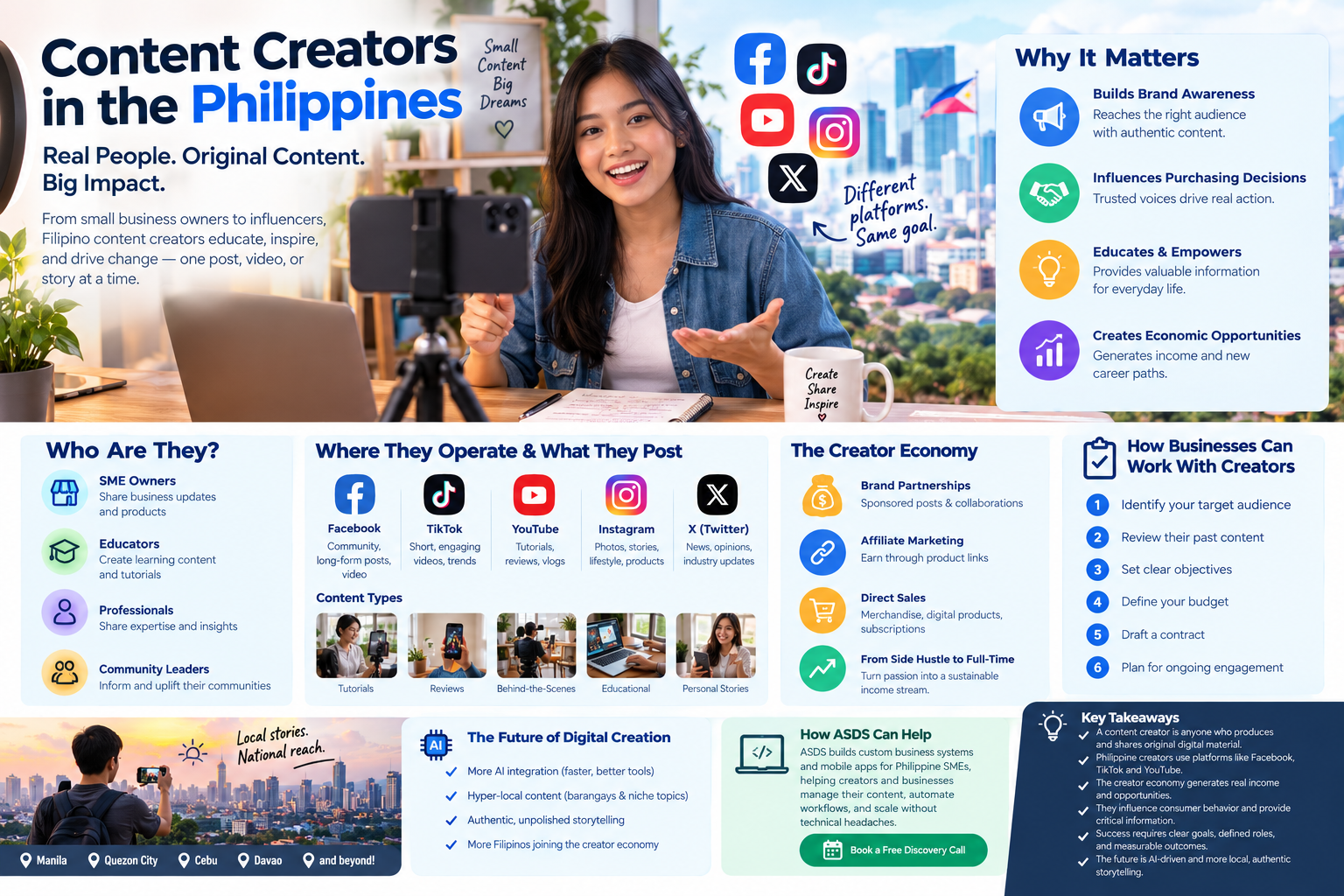
A content creator is anyone who generates digital content for public consumption, acting as a bridge between information sources and an audience. This role extends beyond professional influencers to include small business owners, educators, and community leaders who use platforms like Facebook, TikTok, YouTube, and Instagram to share insights, sell products, or provide services. The core definition involves three elements: the production of original content, the distribution through social or digital channels, and the cultivation of a relationship with an audience that trusts their expertise.
Who is a Content Creator in the Philippines?
In the Philippines, a content creator can be a freelance photographer based in Manila, a school administrator creating educational videos for parents, or a retail shop owner sharing inventory updates on Facebook. These individuals often operate within Metro Manila's vibrant digital landscape, utilizing platforms that are deeply integrated into daily life across the country. Many local creators are not just entertainers but practical guides for their communities, offering advice on everything from managing clinic schedules to navigating government benefits. Their identity is fluid; they might be a student, a worker, or an entrepreneur who happens to create content as a secondary activity or a primary business model.
Where Content Creators Operate and What They Post
Content creators operate primarily on social media platforms that prioritize mobile usage and visual storytelling, making them accessible to the vast smartphone user base in the Philippines. The types of content they post vary widely but generally fall into categories like tutorials, reviews, behind-the-scenes looks at business operations, educational explanations, or personal narratives. For instance, a creator in Quezon City might post short videos showing how their local hardware store manages stock, while another in Manila might create long-form articles about digital marketing strategies for SMEs. This content is often produced using mobile devices and shared during peak hours when users are commuting or relaxing at home.
Common Platforms and Content Types
The most common platforms where Philippine content creators appear include Facebook, TikTok, YouTube, Instagram, and X (formerly Twitter), each serving different purposes depending on the creator's goals. Facebook remains a dominant force for community building and sharing longer-form text or video content within specific groups. TikTok and YouTube Shorts are heavily used for reaching younger audiences with quick, engaging clips that often feature trending audio or visual styles. Instagram focuses on high-quality images and stories to showcase products or lifestyle, while X is frequently used by thought leaders to share news, opinions, and industry updates. The content posted is rarely generic; it is tailored to address specific pain points of the Filipino consumer, such as affordability, trustworthiness, and relevance to local culture.
How Creators Collaborate and Build Community
Content creators in the Philippines often collaborate with one another, forming networks that amplify their reach and provide mutual support through shared resources or joint projects. This collaboration can take the form of co-hosting events, cross-promoting content on each other's channels, or participating in challenges that encourage user-generated content from their respective audiences. Building a community involves more than just posting; it requires active engagement where creators respond to comments, host live Q&A sessions, and create exclusive spaces for followers to interact. In many cases, these communities function as informal support groups where members share tips, offer encouragement, and collectively solve problems related to their industries or personal interests.
The Economics of the Creator Economy
The creator economy in the Philippines has evolved into a significant economic force, generating revenue through brand partnerships, sponsored posts, affiliate marketing, and direct sales of digital products or services. Creators often partner with businesses to showcase products that align with their audience's interests, receiving payment based on engagement metrics like views, shares, or clicks. Some creators have transitioned from part-time activities to full-time careers by monetizing large followings through merchandise, paid memberships, or subscription-based content. This economic shift has allowed many Filipinos to generate income outside the traditional employment model, creating a new class of digital entrepreneurs who can work remotely and reach national markets.
Impact on Businesses and Daily Life
Content creators significantly impact businesses by serving as trusted advisors who influence purchasing decisions and brand perception more effectively than traditional advertising for many Filipino consumers. For small and medium enterprises (SMEs), creators provide actionable insights into marketing, operations, and customer service, helping them navigate the complexities of the digital age. On a daily life level, creators act as information hubs where citizens find guidance on health, education, finance, and civic engagement, often filling gaps left by mainstream media or official communications. Their content can democratize access to knowledge, allowing individuals in remote areas to learn skills or understand rights that were previously difficult to access through formal channels.
Checklist for Businesses Working with Creators
- Identify the specific audience segment you want to reach and find creators who already serve them.
- Review the creator's past content to ensure their tone and style align with your brand values.
- Define clear objectives for the collaboration, such as increasing awareness or driving sales.
- Establish a budget that covers production costs, payment for services, and potential performance bonuses.
- Draft a contract that outlines deliverables, timelines, and usage rights for the content created.
- Plan for ongoing engagement, including how you will measure success after the initial campaign ends.
The Future of Digital Creation in Metro Manila
The future of content creation in Metro Manila points toward greater integration of artificial intelligence, with tools helping creators produce higher quality video and audio faster than ever before. There is a growing trend of hyper-localization, where creators focus on niche topics relevant to specific barangays or industries rather than broad national audiences. The demand for authentic, unpolished content that reflects real Filipino experiences is rising, as audiences become fatigued by overly produced or generic material. As digital literacy increases across the archipelago, more Filipinos are expected to step into the role of creators, turning their unique perspectives into valuable assets for both themselves and the broader economy.
How ASDS can help
ASDS (Arao Software Development Services) understands that running a successful content operation often requires robust digital infrastructure to manage data, automate workflows, and integrate online stores with real-time reporting. Our team of developers in Quezon City specializes in building custom business systems and mobile apps tailored for Philippine SMEs, enabling creators and businesses to scale their operations without technical headaches. If you are looking to digitize your content workflow or build a system that supports your digital growth, we invite you to book a free discovery call to discuss how our solutions can streamline your specific needs.
Key takeaways
- A content creator is anyone who produces and shares original digital material to build an audience.
- Philippine creators operate on platforms like Facebook, TikTok, and YouTube, posting diverse content from tutorials to business updates.
- The creator economy generates significant income through sponsorships, affiliate marketing, and direct sales.
- Creators influence consumer behavior and provide critical information that supports both businesses and individuals.
- Successful collaborations require clear goals, defined roles, and measurable outcomes.
- The future involves more AI integration and a shift toward authentic, hyper-local storytelling.